
Termites
Get reliable termite protection for your home and business. We find the source, stop the colony, and keep your foundation safe from costly damage
Why You’re Seeing Termites
Subterranean termites — the species responsible for almost all termite damage in New Jersey — live in large underground colonies. They tunnel up through soil and into the wood of your home’s foundation, walls, and floors.
A mature colony can have up to a million workers, eating wood 24 hours a day, 365 days a year. Most homeowners only discover them once damage is already significant.
If you’re seeing swarmers (winged termites) , mud tubes (tunnels), or soft wood, it usually means the colony has been active for years.
Signs You Have a Termite Problem
These are the most common warning signs in Elizabeth homes and businesses:
- Mud tubes on foundation walls — pencil‑thin tunnels termites use to travel from soil to wood.
- Hollow‑sounding or soft wood — termites eat wood from the inside out, leaving the surface intact.
- Discarded wings near windowsills — piles of identical wings after a swarm.
- Frass or sawdust‑like material — a sign of internal wood activity.
If you notice any of these, schedule an inspection immediately.
Common Questions Answered Simply
COMMON QUESTIONS
Your Questions Answered Honestly
The questions we hear most. Real answers — just what you need.
Almost never. Most NJ policies exclude termite damage because it’s considered preventable. This is why annual inspections and early treatment are so important — repairs can cost tens of thousands of dollars.
The soil treatment creates an immediate protective zone. Full colony elimination usually takes 30–90 days, depending on colony size. Swarming activity typically stops within a few weeks.
Some NJ mortgage lenders require a Wood‑Destroying Insect (WDI) inspection before closing. If termites or damage are found, having a professional report and treatment record strengthens your position during negotiations.
Why Termites Are So Common in Elizabeth, NJ
Elizabeth’s housing and soil conditions make it a hotspot for termite activity. The area has:
- Older homes with wood touching soil.
- Aging foundations with cracks and moisture.
- Dense neighborhoods where colonies spread easily.
- High water tables and damp soil — ideal for termite survival.
How We Treat Termites
01
Full inspection — foundation, crawl space, and perimeter
We inspect your foundation, basement, crawl space, wood framing, and exterior perimeter for mud tubes, damaged wood, and swarmer activity. We explain what’s active, what’s old, and what needs attention now.
02
Long‑lasting soil treatment barrier
We apply a long‑lasting soil treatment around your foundation. This creates a continuous protective zone that eliminates termites entering from underground and spreads through the colony as workers carry it back.
03
Prevention tips and follow-up
You receive a written report documenting everything we found and the treatment applied — helpful for home sales and insurance records. We schedule follow‑up monitoring to confirm the colony is fully eliminated. If they return in 30 days, so do we, free of charge.
How to Tell the Difference
Termite Swarmer vs. Flying Ant
Knowing the difference between a termite swarmer and a flying ant helps you act quickly.
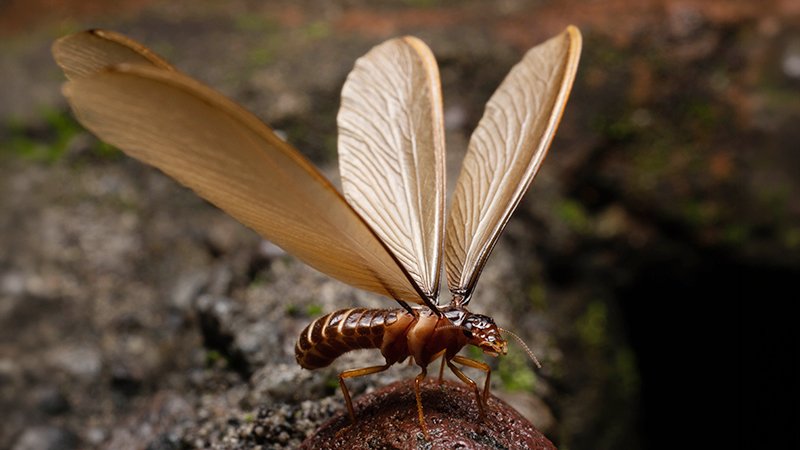
Termite Swarmer
- Straight antennae.
- Equal‑length wings.
- Thick, straight waist.
- Light brown body.
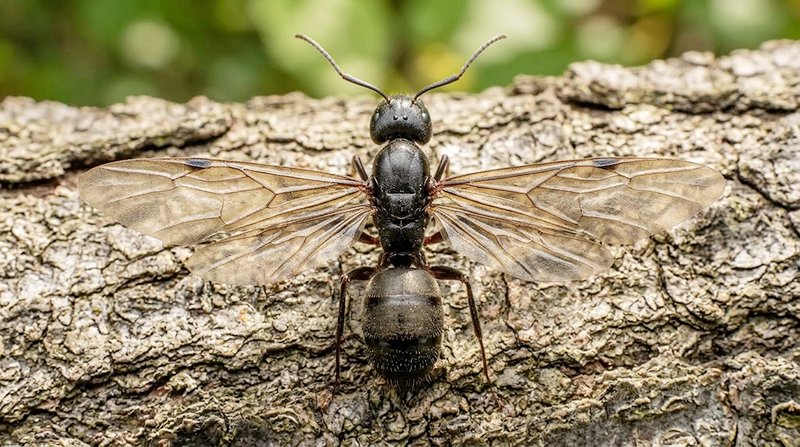
Flying Ant
- Bent, elbowed antennae.
- Front wings longer than back wings.
- Pinched waist.
- Darker body.
Next Pest to Explore: Ants
Ready to get started?