
Bees & Wasps
Bee & Wasp control — safe removal, no DIY risk, especially for anyone with allergies
Why You’re Seeing Bees or Wasps
Stinging insects show up when they find a good place to build a nest, usually somewhere warm, sheltered, and close to food. Different species behave differently, and some are far more aggressive than others. Treating the wrong insect the wrong way can make things worse, which is why we always identify the species first and remove it safely. Before we take action, it helps to know what you might be dealing with.
Signs You Have a Bee or Wasp Problem
Bees or wasps often give warning signs before you see the nest. Look for:
- Increased wasp or bee activity around doors, decks, or rooflines.
- Buzzing sounds coming from inside a wall or ceiling.
- Papery nest pieces on the ground or near eaves (roof).
- A visible nest under eaves, in trees, or hanging from porch ceilings.
Common Bees and Wasps in NJ
Here are the species you’re most likely to see around Elizabeth and Union County — and what makes each one different.
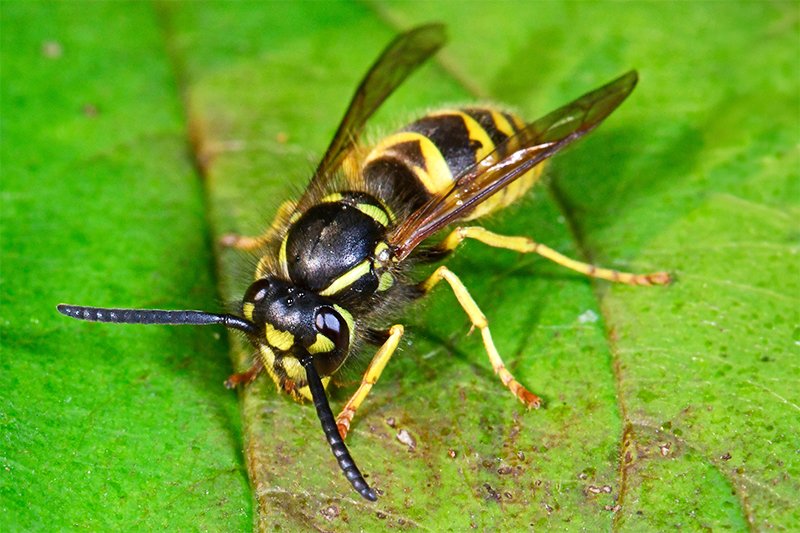
Yellow Jackets — Most Dangerous
Aggressive, can sting many times, and nest in the ground or inside walls. Considered to be the most common cause of stinging emergencies in NJ.
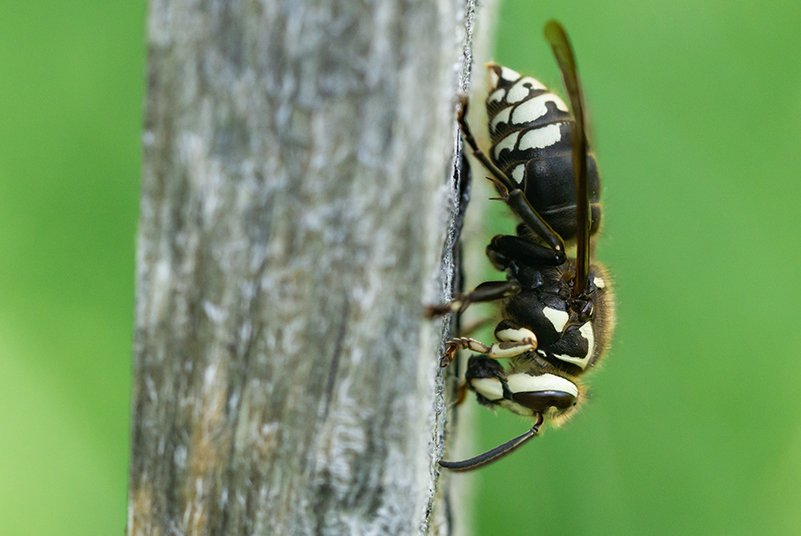
Bald‑Faced Hornets — Dangerous
Large black‑and‑white wasps that build big, football‑shaped nests. Extremely aggressive if disturbed. Never approach their nest.
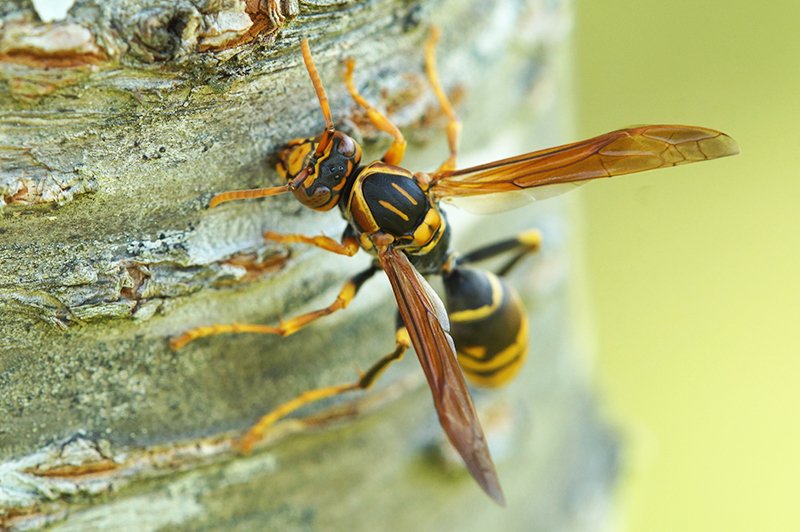
Paper Wasps — Moderate Risks
Build small, open umbrella‑shaped nests under eaves and porch ceilings. Less aggressive unless directly threatened.
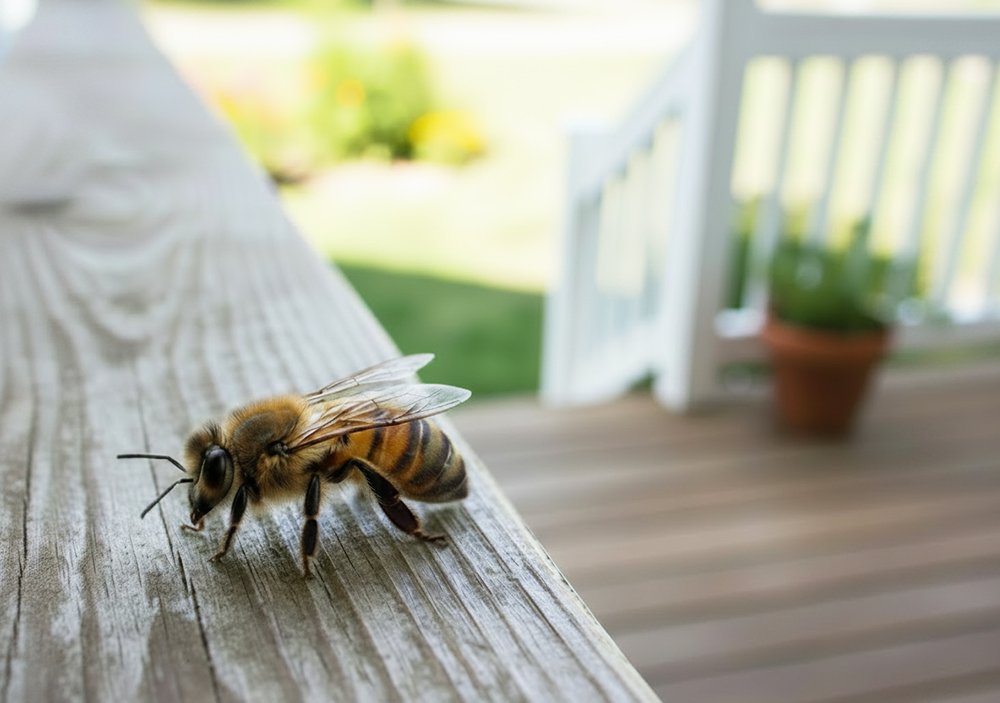
Honeybees — Relocation Preferred
Gentle unless provoked and important pollinators.
When possible, we work with a local beekeeper to relocate them.
Common Questions Answered Simply
COMMON QUESTIONS
Your Questions Answered Honestly
The questions we hear most. Real answers — just what you need.
Store‑bought sprays may work on small paper wasp nests, but they do not work on yellow jacket or hornet nests in walls or the ground. Spraying the outside often makes the colony more aggressive without solving the problem.
Yellow jackets and hornets don’t reuse old nests, but they often return to the same spots because the area is still attractive. We show you how to seal or treat those areas to prevent new nests.
Whenever possible, we work with a local beekeeper to relocate the colony. If relocation isn’t possible, we explain your options clearly before doing anything.
Why Stinging Insects Are Common in Elizabeth, NJ
Elizabeth has older homes, lots of rooflines, and plenty of sheltered spaces — perfect for yellow jackets, hornets, and paper wasps. Ground nests are also common in yards, playgrounds, and near walkways.
In multi‑unit buildings, wall voids and shared structures make it easy for yellow jackets to build hidden nests that go unnoticed until late summer.
How We Treat Stinging Insects
01
Identify the species and locate all nests
We check the entire property for hidden nests — including wall voids, ground burrows, and under decks. Missing a second nest is one of the most common reasons DIY treatments fail.
02
Safe treatment with proper protective gear
We treat nests at dusk or dawn, when activity is lowest and most insects are inside. We use professional protective equipment and apply treatments directly to entry points.
03
Prevention tips and follow-up
Once the colony is gone, we remove the nest when it’s safe to do so.
We also show you what attracted them — like gaps under eaves, open soffits, or ground burrows, and how to prevent new nests next season. If they return in 30 days, so do we, free of charge.
If Someone in Your Home Has a Bee or Wasp Allergy
A nest near a door, walkway, or play area is a medical risk. Please call us right away — we will prioritize your appointment.
If anyone is stung and has trouble breathing, swelling of the face or throat, or dizziness, call 911 immediately.
Next Pest to Explore: Spiders
Ready to get started?