
Mice & Rats
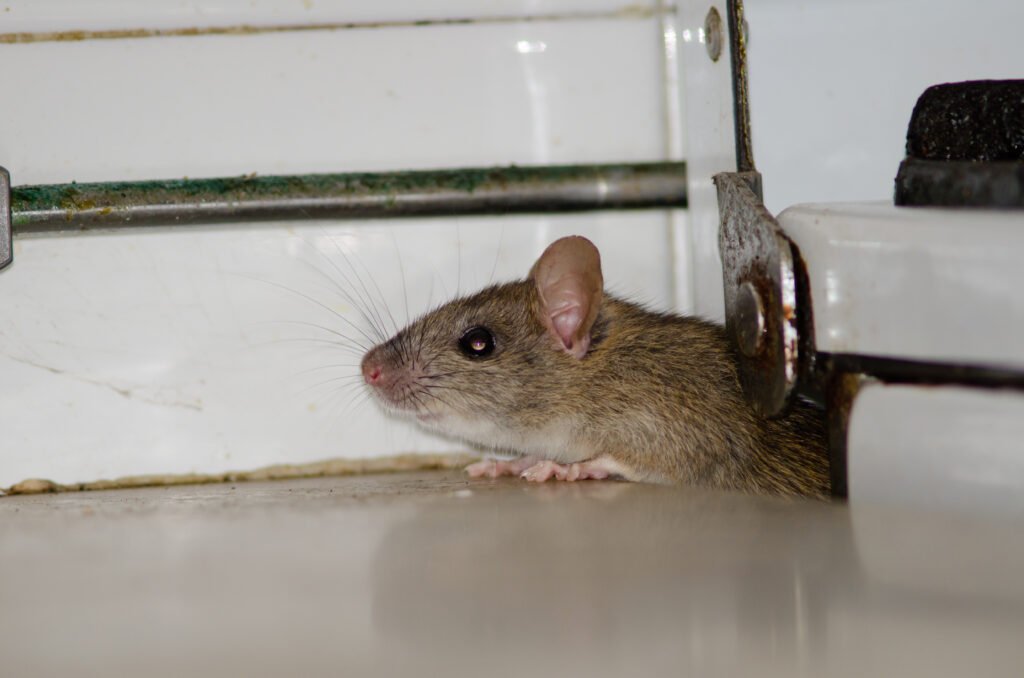
Fast, reliable rodent control — safe for your space, removes the problem quickly, and seals your space so it stays rodent‑free
Why You’re Seeing Rodents Indoors
Rodents (Mice & Rats) inside your home are a health risk — not just an annoyance. Mice and rats contaminate food, chew wiring, and can spread diseases like hantavirus and leptospirosis. A mouse can squeeze through a gap the size of a dime, and if you’ve heard scratching or seen droppings, there’s almost always more than one.
Signs You Have Rodents (Mice & Rats)
Rodents leave clear signs once you know what to look and listen for. The most common include:
- Scratching or scurrying at night — rodents are nocturnal, so nighttime sounds in walls, ceilings, or floors are a major warning sign.
- Droppings near food, walls, or cabinets — mouse droppings are rice‑sized and pointed; rat droppings are larger and blunt.
- Gnaw marks on food packaging or wires — rodents chew constantly to keep their teeth short.
- Grease marks along baseboards — repeated travel routes leave dark smudges from their fur.
Common Questions Answered Simply
COMMON QUESTIONS
Your Questions Answered Honestly
The questions we hear most. Real answers — just what you need.
Mice climb extremely well. They travel inside walls along pipes and wires. In multi‑unit buildings, they move between floors through shared utility chases and wall gaps.
Seeing a mouse during the day usually means the population is large. A single female can have 3–6 litters per year, with 6–8 pups each.
Rats are larger, stronger, and more cautious. Norway rats (brown rats) burrow outside near foundations; mice nest indoors. The treatment approach is different — we identify which you have first.
Yes. We use tamper‑resistant stations pets cannot access. We also place them in pet‑safe locations and explain every placement.
Why Rodents Are Common in Elizabeth, NJ
Fall is peak rodent season in Elizabeth and Union County. As temperatures drop in September and October, mice and rats look for warmth inside buildings.
Elizabeth’s dense urban layout makes rodent movement easy:
- Attached row homes.
- Older foundations with small gaps.
- Shared utility pipes between buildings.
- Multi‑unit apartments with connected wall voids
One small entry point in one unit can turn into a building‑wide problem within weeks.
How We Treat Rodents (Mice & Rats)
01
Inspection — find every entry point
We inspect the full perimeter, foundation, utility penetrations, and interior areas. A mouse only needs a dime‑sized gap — we find them all.
02
Targeted trapping, bait stations and seals
We place tamper‑resistant bait stations and traps in active areas. We handle all trap removal — you never have to touch or see a trapped rodent. Trapping alone doesn’t solve the problem. We seal gaps, cracks, and utility penetrations with materials rodents cannot chew through. This is what makes the fix permanent.
03
Prevention tips and follow-up
We return to check stations and confirm activity has stopped. If they return in 30 days, so do we, free of charge.
Health Risks From Rodents — Act Promptly

Rodents contaminate surfaces with droppings, urine, and fur. Diseases linked to rodents include:
Droppings should never be swept dry — this can release particles into the air. They should be dampened first and cleaned with gloves. If you suspect rodent activity, it’s important to act quickly.
Next Pest to Explore: Wildlife
Ready to get started?